

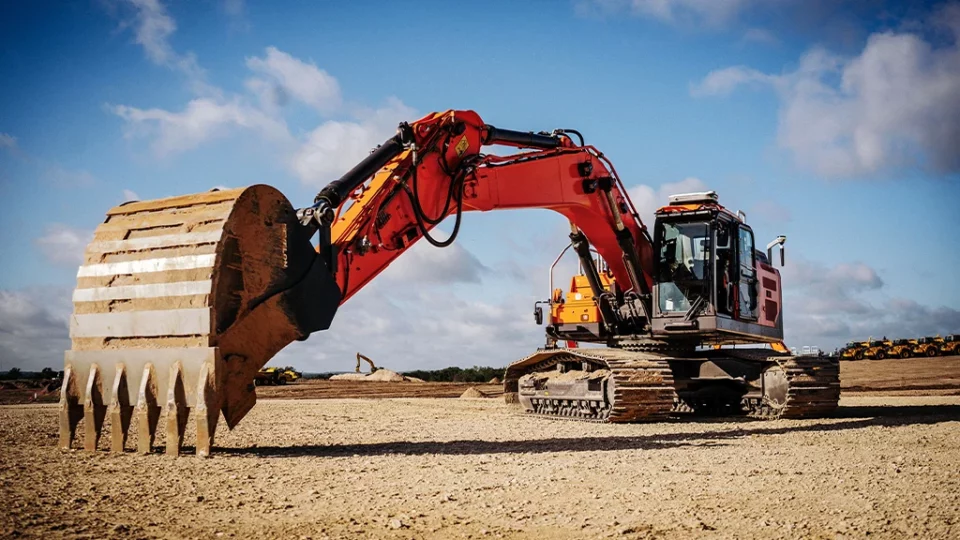
Gravis Robotics has raised $200 million in a Series A funding round backed by SoftBank, providing significant capital to accelerate the company’s development of physical AI and the global deployment of autonomous heavy machinery across construction and infrastructure projects.
The funding comes as global infrastructure investment continues to expand, driven by growing demand for energy networks, data centres, housing, transportation and climate-resilient infrastructure. Gravis Robotics believes construction has become a major bottleneck in meeting this demand, with labour shortages making it increasingly difficult to deliver projects at the required pace.
The company is addressing this challenge through automation designed specifically for heavy construction equipment. Unlike physical AI systems operating in controlled environments, autonomous construction machinery must work in constantly changing conditions while actively reshaping the environment. Gravis Robotics uses large-scale simulated training to teach its AI systems how to respond to different machines, terrain and soil conditions, helping bridge the gap between virtual environments and real-world job sites.
Its technology is designed to interpret machine telemetry and physical feedback, allowing autonomous equipment to respond to changes in ground conditions, hydraulic resistance and machine performance. The company says its AI models are designed to adapt across different equipment types and manufacturers rather than being limited to a single machine or brand.
A key component of the system is the Gravis Rack, an autonomous control kit that can be retrofitted to existing heavy equipment. The system has been deployed across machinery from manufacturers including Caterpillar, Case, DEVELON, John Deere, JCB, Hitachi, Sumitomo, Yanmar and Volvo, allowing contractors operating mixed fleets to use a common autonomous technology platform without replacing their existing equipment.
Gravis Robotics says its learning-based software can adapt to machines of different sizes and configurations without requiring extensive custom programming. The company also claims that its technology can deliver productivity improvements of up to 30% compared with peak manual operation, while supporting safer working environments.
The platform can operate across different levels of automation. Through Gravis Copilot, operators can remain in the cab while receiving real-time 3D guidance and hazard detection. At higher levels of autonomy, operators can move into supervisory roles, overseeing multiple autonomous machines simultaneously. Gravis-equipped machines can also continuously collect site data, supporting automated surveying and hazard mapping while construction work is underway.
With the new investment, Gravis Robotics aims to expand its technology and accelerate the adoption of autonomous heavy machinery as construction companies look for ways to address labour shortages, improve productivity and meet the growing global demand for infrastructure.
