

Maintaining offshore infrastructure safely and efficiently remains a critical priority as Africa and the Middle East continue to invest in offshore oil, gas and marine energy developments. Advanced subsea intervention technologies are helping operators carry out complex maintenance and decommissioning work while reducing operational risk and improving project efficiency.
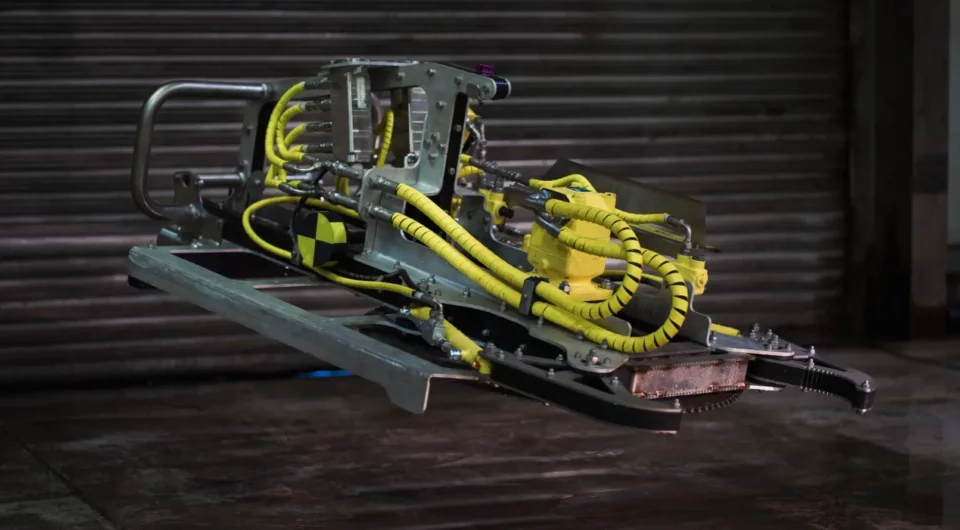
Decom Engineering has demonstrated the capabilities of its newly developed C1-16UL ultra-light chopsaw after successfully completing a demanding deep-water cutting operation in the Gulf of Mexico. Although deployed outside the region, the technology has significant relevance for offshore infrastructure projects across Africa and the Middle East, where ageing offshore assets and new energy developments are driving demand for specialised maintenance solutions.
The project involved cutting 137 mm stud-less mooring chains connected to a floating production system operating in an active offshore field. Due to strict safety requirements and the risk of dropped objects, Decom Engineering developed a specialised link-retention system that securely held each chain section during cutting, preventing debris from falling to the seabed and ensuring safe project execution.
Installed using a remotely operated vehicle (ROV), the custom retention clamps enabled all twelve chain cuts to be completed successfully, with the fastest operation taking just 15 minutes. The solution highlights how innovative engineering can improve safety and efficiency during complex offshore intervention projects.
Designed specifically for subsea operations, the C1-16UL is engineered to cut flexible risers, mooring chains and deep-water tensioned mooring systems while remaining highly manoeuvrable underwater. Weighing approximately 270 kg in air but only around 30 kg in seawater, the lightweight system can be deployed using purpose-built frames or mounted directly onto ROVs, allowing operators to access confined and technically challenging offshore environments.
As offshore infrastructure expands across regions such as West Africa, North Africa and the Middle East, technologies that simplify subsea maintenance and support safer decommissioning are becoming increasingly valuable. The ability to carry out precision cutting operations while minimising environmental risks and reducing vessel intervention time can help operators lower project costs and improve asset management throughout the lifecycle of offshore installations.
With governments and energy companies investing in offshore energy infrastructure, modern subsea engineering technologies such as lightweight cutting systems are expected to play an increasingly important role in supporting safe inspection, maintenance and decommissioning activities across the region.
